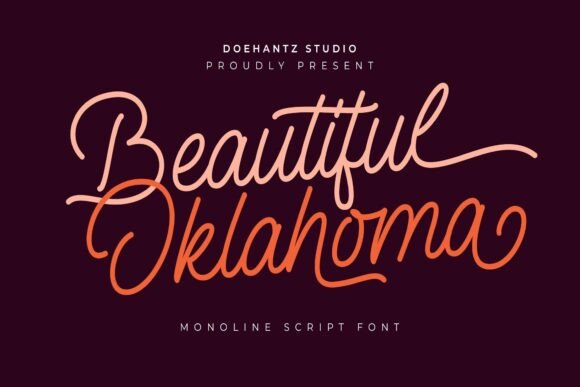
Beautiful Oklahoma: A Modern Script for Timeless Branding
There’s a specific kind of elegance that doesn’t shout. It’s in the way a handwritten note feels more personal than a printed card, or how a single, flowing line can suggest a story without a single word. This is the space where the right typeface lives—not just as a tool for communication, but as an ambassador for a feeling. For projects that aim to feel both refined and approachably human, the search for that perfect typographic voice is a creative journey in itself.
The Anatomy of Elegant Simplicity
At its heart, this typeface is a study in sophisticated minimalism. It’s a monoline script, meaning each character is drawn with a consistent, single weight line. This creates a clean, uninterrupted flow that feels both modern and timeless. Unlike more ornate scripts that can feel busy, its strength lies in its restraint. The letterforms connect with a natural, graceful rhythm, avoiding the overly casual look of some handwritten fonts while steering clear of the rigid formality of traditional calligraphy. It occupies that coveted middle ground: professional enough for a business card, yet personal enough for a wedding invitation.
The visual appeal is immediate. It feels curated, as if each curve and connection was considered with care. This isn’t a font that mimics hurried handwriting; it suggests a confident, steady hand. For designers, this translates to instant sophistication. When applied to a logo, it doesn’t just spell out a name—it conveys an ethos of quality, attention to detail, and bespoke craftsmanship. The consistent line weight ensures it reproduces beautifully at various sizes, from a tiny favicon to a large-scale poster, maintaining its clarity and charm without becoming spindly or overwhelming.
From Digital Canvas to Physical Touchpoint
Understanding a font’s personality is one thing; seeing how it performs in the wild is where its true value emerges. Its versatility is a significant asset for anyone building a visual world, whether for a brand, an event, or a personal project.
For branding and logo design, it acts as a powerful differentiator. In a sea of geometric sans-serifs and standard serifs, a well-chosen script like this one can make a brand instantly recognizable. It works beautifully for boutique businesses, artisanal products, creative agencies, and lifestyle brands aiming to project an image of curated elegance. Think of the logo for a custom jewelry studio, a high-end florist, or a specialty coffee roaster—the font itself tells part of the brand story before a customer even reads the name.
Beyond the logo, it becomes a core part of the brand identity system. Use it for headers on a website to draw the eye, for pull quotes in a blog to add visual interest, or for the title of a digital product like an e-book or online course. In packaging design, it can elevate a product’s shelf presence, making a simple box or label feel like a premium gift. On social media graphics, it lends a cohesive, professional look to quotes, announcements, and story highlights, helping to build a recognizable feed.
The applications extend gracefully into the physical realm. It’s a natural fit for print materials like business cards, letterheads, and thank-you notes, where a personal touch is valued. For editorial design, consider it for magazine mastheads, chapter titles, or feature article headings. It’s also a standout choice for merchandise—think of elegant script on tote bags, t-shirts, or mugs that feels designed rather than generic.
Practical Guidance for Pairing and Application
Choosing a beautiful script is only the first step. Using it effectively requires a bit of strategic thinking to ensure it enhances, rather than hinders, your project’s goals.
Pairing is everything. A script font, no matter how elegant, can become tiresome if used for long blocks of text. Its primary role is as a display or accent font. The key is to pair it with a highly readable, neutral companion for body copy. A clean sans-serif font is often a perfect match, providing a modern counterpoint that keeps the overall design feeling fresh and accessible. A classic, understated serif font can also work well, especially if the project leans into a more traditional or luxurious aesthetic. Always test your pairings at the actual sizes they’ll be viewed at.
Context dictates usage. A wedding invitation might use the script for the couple’s names and a simpler font for the details. A website might use it for the main hero headline but switch to a sans-serif for navigation and paragraphs. On a restaurant menu, it could highlight the chef’s special, while the dish descriptions remain in an easy-to-read serif. The goal is to create a visual hierarchy that guides the viewer’s eye naturally.
Consider the license. If you’re using this for commercial projects—a client’s logo, products for sale, or marketing materials—ensure you have the appropriate commercial font license. Most premium fonts come with clear licensing terms that outline permissible uses. This isn’t just a legal formality; it’s part of respecting the craft of type design and ensuring you can use your assets confidently.
More Than a Font: A Tool for Visual Storytelling
Ultimately, a typeface like this is less about the individual letters and more about the story they help you tell. It’s a design asset that contributes to a larger narrative of quality, creativity, and intentionality. For the small business owner, it’s a way to compete visually with larger brands. For the content creator, it’s a tool to establish a distinctive aesthetic. For the designer, it’s a versatile addition to the toolkit that can solve specific creative briefs with grace.
In a landscape saturated with visual noise, the choice to use a refined, purposeful script is a deliberate one. It signals that you’ve considered every detail. It helps build brand recognition by creating a consistent and memorable visual signature. It improves professional presentation by lending a polished look to every touchpoint. And it fosters audience engagement by making your communications feel more human and considered.
So, whether you’re crafting the identity for a new venture, designing the stationery for a life milestone, or simply seeking to infuse your personal projects with a dose of refined beauty, exploring a typeface with this kind of balanced, elegant character is a worthwhile step. It’s an invitation to let your typography do more than just convey information—it can help set the very tone of your vision.