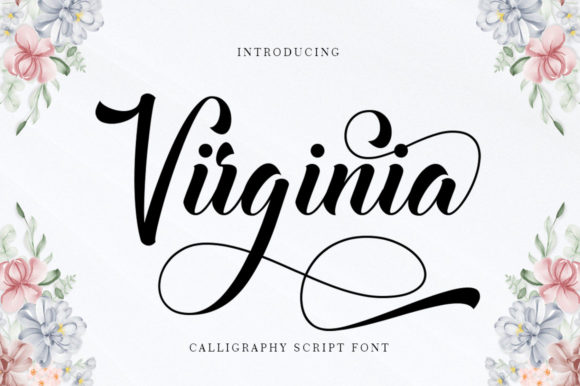
Virginia: A Script Font That Brings Quiet Sophistication to Your Work
There’s a particular quality in design that doesn’t shout. It whispers. It draws you in with an understated confidence, a sense of effortless style that feels both personal and polished. This is the space where the Virginia calligraphic script font lives. It’s not about dramatic flourishes or overwhelming loops; it’s about a subtle, clean, and dainty elegance that elevates a project without dominating it. For anyone crafting a brand identity, designing a wedding suite, or creating a line of merchandise, finding a typeface that conveys this refined yet approachable feeling can be a game-changer.
The Personality of a Refined Script
Virginia’s design is rooted in classic calligraphy but interpreted with a modern, minimalist sensibility. Its multiple baselines allow for a natural, flowing rhythm in text blocks, mimicking the slight variations of hand-lettering without sacrificing legibility. The letterforms are delicate, with thin, graceful strokes that avoid the heavy, overly casual look of some script fonts. This makes it incredibly versatile. It feels at home on a high-end cosmetic label, a boutique bakery’s menu, and the title of a minimalist blog. The font’s PUA encoding is a practical blessing for designers, offering easy access to a full suite of glyphs and swashes. This means you can add a decorative initial capital or a subtle flourish to a final letter with a simple click, tailoring the typography precisely to your project’s mood without needing advanced software skills.
Where Virginia Truly Shines: Practical Applications
The true test of any creative font is how it performs in the real world. Virginia’s strength lies in its adaptability across a spectrum of mediums, consistently delivering a professional and cohesive aesthetic.
Building a Brand Identity: For small businesses, especially in sectors like beauty, wellness, artisanal food, or boutique retail, a script font can be the cornerstone of a memorable brand. Virginia works beautifully for a brand name in a logo, setting a tone of sophistication and care. Pair it with a clean, geometric sans-serif for body text to create a balanced and readable visual system. This combination ensures your brand looks established and trustworthy, whether it’s on a business card, a website header, or packaging tape.
Elevating Print and Packaging: Imagine the soft, textured paper of a wedding invitation with the couple’s names rendered in Virginia’s elegant script. Or consider a small-batch jam label where the product name uses Virginia, conveying homemade quality with a professional touch. In editorial design, it can be used for pull quotes, chapter titles, or magazine headlines to add a human, sophisticated element that contrasts beautifully with serif or sans-serif body copy.
Digital Presence and Content: In the digital realm, first impressions are instantaneous. Using Virginia for the title graphics of your blog, the main text on a hero image, or within social media templates can instantly elevate your content’s perceived value. It helps your Instagram posts or Pinterest graphics stand out in a crowded feed, suggesting a curator’s eye for detail. For digital products like e-books or online course materials, it can make the experience feel more bespoke and valuable.
Making It Work: Font Pairings and Readability
A script font’s elegance can quickly become a liability if it hinders communication. The key is strategic pairing and mindful application. Virginia, with its clean lines, is more readable than many scripts, but it’s still best used for short, impactful phrases—headlines, logos, quotes, and accents. Avoid setting long paragraphs in script; the eye needs the clear structure of a serif or sans-serif for extended reading.
The Art of the Pair: The most successful designs often use a maximum of two or three fonts. Let Virginia be your accent. Try pairing it with:
- A Classic Serif: Fonts like Playfair Display or Lora create a timeless, elegant duo perfect for wedding invitations or luxury branding.
- A Modern Sans-Serif: Fonts like Montserrat, Open Sans, or Poppins offer a clean, contemporary contrast that keeps the design feeling fresh and accessible. This is ideal for websites, social media, and marketing materials.
- A Simple Slab Serif: For a touch of rustic or artisanal charm, a pairing with a slab serif like Roboto Slab can work wonderfully for packaging or café menus.
Always test your pairings in context. View them at the size they’ll be used, on both a screen and in print if possible. Check that the visual hierarchy is clear—the eye should know where to look first.
Choosing Your Style and Understanding Licensing
Virginia typically comes with multiple styles, often including regular and bold weights, and sometimes alternate stylistic sets. Reviewing the full font family before purchase is crucial. Does it have the specific swashes or ligatures you envision for your project? Test the font with your own brand name or a key headline to see how the letters connect and flow.
Equally important is understanding the license. Most premium fonts, including Virginia, come with a commercial license that allows for use in logos, merchandise, and digital products. However, the specifics can vary—some licenses may have limits on the number of users or the type of projects (e.g., for print-on-demand). Always read the license agreement to ensure your intended use is covered, protecting both your project and the font designer’s work.
In a landscape saturated with loud, attention-grabbing visuals, Virginia offers a different kind of power: the power of subtle sophistication. It’s a tool for creators who understand that true style often lies in the details, in the choice that feels both intentional and effortless. By integrating this script font thoughtfully into your design toolkit, you’re not just selecting letters; you’re curating an experience of elegance and clarity for your audience.