Why the Brilliant Font Feels Like a Friendly Handshake
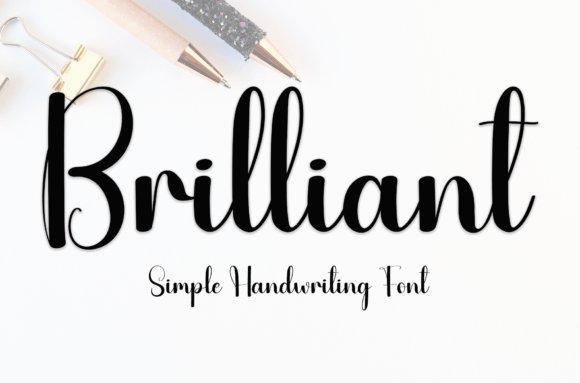
There’s a particular moment in design where everything just clicks. You’re staring at a blank canvas—maybe it’s a wedding invitation mockup or a social media template—and you know exactly what feeling you want to evoke, but the default fonts aren’t getting you there. You need something with personality, something that feels human without being messy. That’s where a typeface like Brilliant enters the conversation. It’s not just a collection of letters; it’s a sweet and friendly handwritten font that carries a distinct warmth, making it a versatile tool for anyone trying to inject a bit of fun and authenticity into their visual communication.
Visual appeal in typography is often about the "micro-interactions" between the viewer and the text. With Brilliant, the aesthetic leans heavily into a fresh, neat, and approachable vibe. It avoids the chaotic loops and illegible swashes that plague many script fonts, yet it retains that organic, hand-lettered charm. If you are a small business owner or a creative entrepreneur, this balance is crucial. You want your brand to feel personal and accessible, but you cannot afford to sacrifice readability for the sake of style. Brilliant manages to bridge that gap, offering a look that feels like it was written just for the reader, creating an immediate emotional connection that rigid, geometric sans-serif fonts often struggle to achieve.
Bringing Personality to Brand Identity and Logos
When you are building a brand identity, consistency is your best friend, but personality is your differentiator. A font like Brilliant shines brightest when applied to logo design and brand collateral. Imagine a boutique bakery, a lifestyle blog, or a handmade jewelry shop. These brands thrive on storytelling and human connection. Using a premium font that mimics natural handwriting helps establish a tone of voice before the customer even reads the copy.
However, using a handwritten font for a logo requires a strategic approach. Because Brilliant is a display font, it is designed to be the star of the show at larger sizes. For a logo, this works perfectly. It creates a focal point that is memorable and distinct. To ensure your brand identity remains professional, consider how you pair this typeface with others. A common mistake is pairing a script font with another decorative font. Instead, look for a clean, geometric sans serif font for your body text. This contrast allows Brilliant to pop for headlines and logos while ensuring your detailed information remains legible and grounded.
Mastering Packaging and Physical Products
In the world of packaging design, the tactile experience meets the visual. You want your product packaging to jump off the shelf. Brilliant offers that "fun touch" that can transform a standard label into a delightful experience. Think about product tags, thank-you cards tucked into orders, or the main branding on a candle jar. The fresh and neat style of this typeface suggests quality and care, implying that the product inside was made with attention to detail.
For merchandise like tote bags, mugs, or t-shirts, a creative font that flows naturally is often more successful than blocky text. It mimics the look of custom hand-lettering, which adds perceived value to the item. When designing for print, always test the font in various sizes. While Brilliant is legible, handwritten fonts generally benefit from a bit more breathing room (tracking) than standard serif or sans-serif types. Ensure that when you scale it down for small print on the back of a box, the legibility holds up.
Dominating Digital Spaces: Social Media and Web Design
The digital landscape moves fast, and you have milliseconds to capture attention. On platforms like Instagram or Pinterest, social media graphics need to be visually arresting. Brilliant works exceptionally well for overlaying text on images or creating standalone quote graphics. Its friendly nature stops the scroll because it feels less like an advertisement and more like a note from a friend.
When it comes to web design, you need to be more cautious. While Brilliant is a fantastic creative font, it should rarely be used for paragraph text or navigation menus. The eye struggles to read long blocks of handwritten script on a screen. Instead, use it strategically for hero section headlines, call-to-action buttons, or section headers. This breaks up the monotony of standard web design typography and guides the user’s eye to the most important parts of the page. For blog headers, it adds a personal editorial touch, making the content feel like a curated magazine rather than a static webpage.
Event Stationery and Editorial Design
It is impossible to discuss a font like this without addressing its roots in event stationery. As noted, it is ideal for wedding invitations, but the application extends to any celebratory design. Birthday parties, baby showers, graduation announcements, and holiday cards all benefit from a typeface that exudes joy. The "sweet and friendly" descriptor is exactly what you need when you are inviting people to share in a happy moment.
Beyond events, consider its use in editorial design. If you are working on a magazine layout, a lookbook, or a digital PDF guide, Brilliant can serve as a powerful accent font. It pairs beautifully with a classic serif font. The serif provides the structure and tradition, while Brilliant adds a modern, modern typography twist. This mix keeps the layout dynamic and prevents the design from feeling too corporate or stiff. It’s a great way to highlight pull quotes or chapter titles in digital products like e-books or online course workbooks.
Practical Advice for Implementation
Choosing a font is just the first step; implementing it effectively is where the real work begins. Before you commit Brilliant to a large print run or a website redesign, there are a few practical considerations to keep in mind regarding font pairing and technical execution.
- Test Your Pairings: Never use Brilliant in isolation. Open your design software and type out a sentence in Brilliant, followed by a paragraph in your chosen body font. Do the x-heights feel compatible? Does the weight of the handwritten font overpower the text? A good rule of thumb is to pair a light, airy script with a medium-weight sans-serif.
- Check the Glyphs: A premium font often comes with stylistic alternates or ligatures. Explore the character map. You might find that certain letter combinations (like "th" or "st") have special connectors that make the flow look more natural. Using these features separates amateur design from professional marketing assets.
- Readability is King: If you are using Brilliant for a poster or a sign, stand back from your screen. Can you read it from a distance? If the answer is no, increase the size or simplify the message. A beautiful font fails its purpose if the message gets lost.
- Commercial Licensing: Always double-check the licensing terms. If you are using this for client work or selling merchandise, ensure you have the appropriate commercial font license. This protects you legally and supports the type designers who create these design assets.
Ultimately, typography is about communication. Whether you are crafting a brand identity for a new startup, designing a social media campaign, or creating a heartfelt invitation for a loved one, the goal is to convey the right emotion. Brilliant offers a specific flavor—one that is welcoming, clean, and joyful. By pairing it wisely and using it in the right contexts, you can elevate your projects from simple layouts to engaging visual stories that resonate with your audience. It’s a reminder that in a digital world, a little bit of human touch goes a long way.